Dynamic pricing: Overview, importance, and tips for implementation

Pricing decisions can make or break a business, yet many companies struggle to strike the right balance. Static pricing models often fail to adapt to shifting market demands, leaving revenue potential untapped and operational efficiency hindered.
This is where dynamic pricing can help—a strategy that enables your business to adjust prices in real-time based on several key factors.
Explore the ins and outs of dynamic pricing, including its strategic importance and practical implementation tips, to understand how this flexible pricing model can help your business achieve greater financial agility and growth.
Understanding dynamic pricing fundamentals
Dynamic pricing, also known as variable pricing, empowers your business to maximize revenue and remain competitive in fluctuating markets. Here are some core concepts of dynamic pricing:
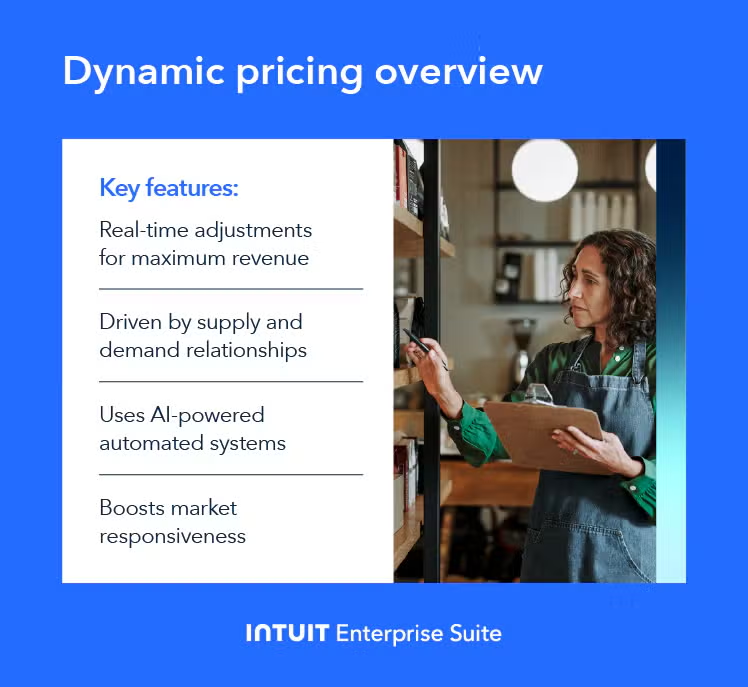
- Real-time price adjustments: Prices instantly update or frequently to reflect current conditions, such as inventory levels or peak demand periods.
- Supply and demand relationship: Dynamic pricing relies heavily on understanding how price changes impact consumer behavior and vice versa.
- Automated pricing systems: Your business can streamline the process of adjusting prices efficiently by leveraging AI and algorithms.
- Market responsiveness: Businesses using dynamic pricing strategies can react swiftly to competitors' pricing, ensuring they maintain an edge.
Before you begin with dynamic pricing, make sure your customers understand how prices are determined to maintain trust. In addition, avoid misleading practices that could harm buyers or violate regulations, and prevent price-fixing or other anti-competitive behaviors that could lead to legal challenges.
Types of dynamic pricing models
Dynamic pricing encompasses various pricing models designed to align with your business goals and market dynamics. Here are the three main variable pricing models that can help you optimize revenue and stay competitive.
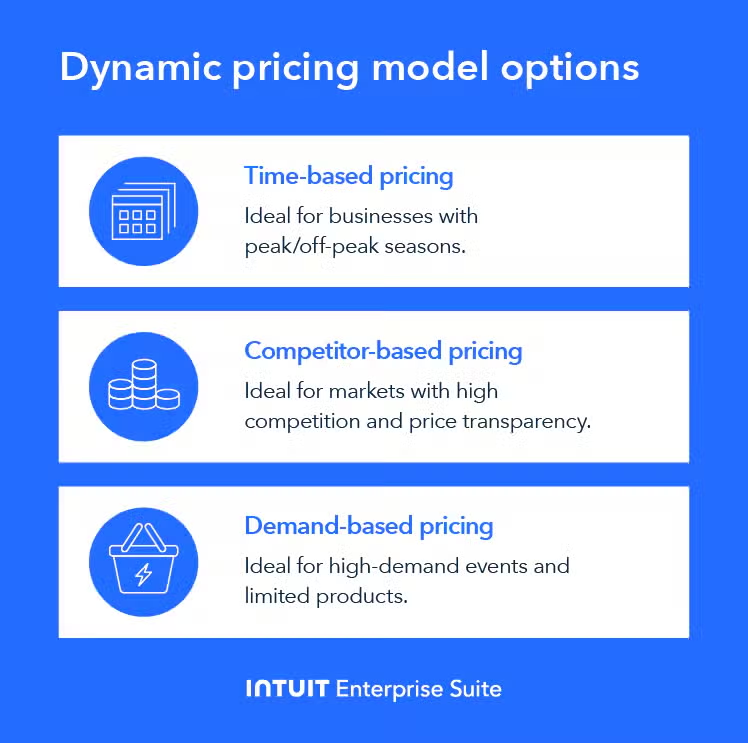
Time-based pricing
This model adjusts prices based on when you use or purchase a product or service. To master dynamic pricing, you need to focus on things like:
- Peak vs. off-peak pricing: Higher prices during high-demand times, such as holidays.
- Seasonal adjustments: Changes to match seasonal trends, ideal for peak season selling strategies.
- Time-of-use rates: Common in energy industries where rates vary by time of day.
Competitor-based pricing
This strategy relies on analyzing competitors’ prices to maintain market positioning. If you use this pricing model, focus on things like:
- Price matching: Aligning with competitors’ pricing to attract customers.
- Market positioning: Strategically pricing higher or lower based on perceived value.
- Competitive monitoring: Using tools to track and respond to market trends.
Demand-based pricing
In demand pricing models, pricing adjusts dynamically based on demand levels. Here’s what you should be ready for:
- Supply-demand balance: Prices rise with high demand and limited supply.
- Peak pricing: Higher rates during demand surges, a key dynamic pricing strategy.
- Scarcity pricing: Premium pricing for limited-availability items.
While these pricing models may seem intimidating, tools like Intuit Enterprise Suite (IES) can streamline the process with automated data analysis and forecasting.
Key benefits of dynamic pricing
Dynamic pricing helps drive client profitability, improve operational efficiency, and enhance customer experience. Here are some of the key benefits that can help you decide whether dynamic pricing is a good idea for your organization.
Revenue maximization
Dynamic pricing helps maximize revenue by optimizing market demand. Adjusting prices based on real-time conditions prevents overstock or understock situations, ensuring your business captures the highest possible revenue.
It also focuses on profit optimization by aligning pricing strategies with demand patterns, reducing the risk of lost sales opportunities.
Operational advantages
Dynamic pricing offers key benefits, including automation and data-driven processes. It allows you to quickly adjust prices in response to changing market conditions, reducing the need for manual intervention.
This, in turn, enhances operational efficiency by providing deeper market intelligence, improving inventory management, and ensuring that supply levels remain aligned with demand.
Customer insights
Dynamic pricing provides valuable insights into customer behavior, demand patterns, and purchasing trends.
By understanding how customers respond to different pricing strategies, you can refine your approaches and offer more personalized and relevant pricing that enhances the overall customer experience.
Dynamic pricing challenges and solutions
Variable pricing isn’t just about benefits—it comes with several challenges, too. But with the right strategies, you can overcome these obstacles and unlock its full potential.
While implementing dynamic pricing, you may face the following challenges:
- Customer resistance: Fear of perceived unfair pricing or inconsistent pricing structures.
- Price war risks: Intense competition leading to aggressive pricing strategies.
- Data accuracy: Inaccurate or incomplete data affecting pricing decisions.
- System integration: Difficulty integrating pricing systems with existing operations.
To overcome these challenges, you should focus on:
- Customer communication: Clearly explain pricing models to ensure transparency and build trust.
- Competitive analysis: Continuously monitor competitors to adjust pricing effectively without triggering price wars.
- Market monitoring: Use real-time data to stay ahead of demand shifts and ensure pricing remains relevant.
- Price optimization: Leverage analytics to refine pricing strategies and maximize profitability.
An enterprise resource planning (ERP) system can help overcome several dynamic pricing challenges by improving data accuracy and system integration, providing real-time insights into customer behavior and demand patterns.
Best practices for dynamic pricing implementation
Successful dynamic pricing requires a structured approach and ongoing refinement. Here are key best practices to ensure effective implementation:
- Strategy development: Clearly define your dynamic pricing strategy based on business goals and customer behavior. A well-defined strategy ensures that pricing decisions are consistent, aligned with company objectives, and tailored to the target market.
- Goal setting: Set specific, measurable goals such as revenue growth, margin optimization, or improved customer satisfaction. These goals provide a clear direction and help track the success of dynamic pricing efforts.
- Market analysis: Conduct thorough market research to understand customer demand patterns, competitor pricing, and external factors that influence pricing. This analysis ensures that pricing strategies remain relevant and competitive.
- Resource allocation: Allocate sufficient resources, including technology, tools, and staff, to support dynamic pricing initiatives. AI-driven accounting software, like Intuit Assist, can help by providing intelligent financial management recommendations.
- Monitoring and adjustment: Regularly monitor pricing performance and adjust strategies based on changing market conditions. AI-powered tools can help automate data collection, enabling faster and more accurate pricing adjustments.
- Performance tracking: Establish key performance indicators (KPIs) to track the impact of dynamic pricing on revenue, margins, and customer engagement. Predictive analytics can provide real-time insights for more informed decision-making.
- Strategy refinement: Continuously refine pricing strategies by analyzing the effectiveness of past decisions. Use AI-driven tools to identify patterns, adjust pricing models, and optimize performance over time.
- Market response: Stay agile and responsive to shifts in customer and market behavior, enabling quick responses to maintain a competitive edge.
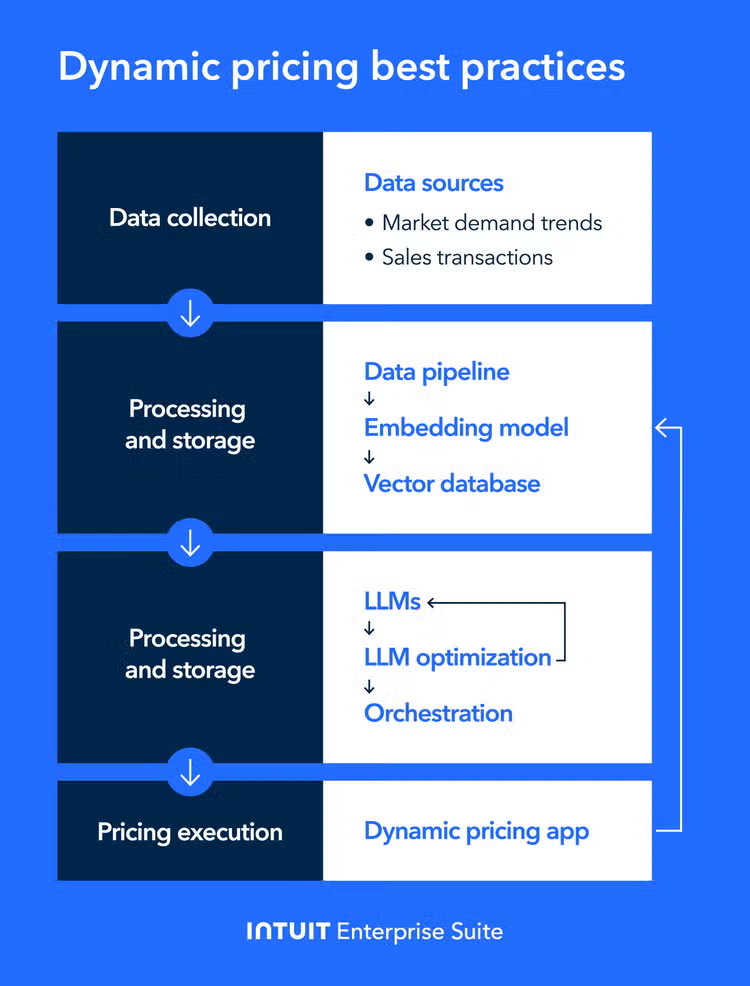
Harnessing dynamic pricing for midsize business success
Dynamic pricing presents both challenges and opportunities for midsize businesses aiming to stay competitive. By leveraging best practices and adopting the right tools, you can optimize product line pricing strategies, improve efficiency, and drive profitability.
To go the extra mile, you can use tools like Intuit Enterprise Suite (IES) to streamline data management, automate pricing decisions, and gain valuable insights into customer behavior. IES can help you effectively navigate the dynamic marketplace and achieve long-term success.
Disclaimer: Intuit Assist and certain other AI features and functionalities are currently available at no additional cost to certain QuickBooks users. Pricing, terms, conditions, special features, and service options are subject to change without notice. Intuit reserves the right to discontinue the feature at any time for any reason in its sole and absolute discretion.